Saturday, May 10, 2014

Adding letters to the alphabet: scientists create the first living organism with semi-synthetic genetic code

There have been some really interesting reports in genomics and DNA technology this week!  One in particular, has found a way to expand the DNA "alphabet" of Escherichia coli.

File:Base pair GC.svg
File:AT DNA base pair.pngDNA is made up of four nucleotides, each containing a nitrogenous base, a five-carbon sugar backbone (either ribose or deoxyribose), and at least one phosphate group.  The nucleotides form hydrogen bonds with each other, forming base pairs, specific to their hydrogen bonding capacity.  Adenine (A) binds with Thymine (T), and Cytosine (C) binds with Guanine (G).  This is the basis for every single DNA strand we have ever encountered in any living organism on the planet.  All of your genetic information is encoded by these four nucleotides.

A group out of The Scripps Research Institute in California created an additional pair of unnatural (not found in nature) nucleotides, and expressed them stably in E. coli.  That's actually incredibly complicated, because the unnatural nucleotides have to be present in the cell in a concentration that allows them to be integrated into DNA strands, they have to line up alongside the natural nucleotides so as to not interfere with the structure of the DNA strand, and they have to be recognized by the cell's internal DNA replication machinery.  This is what the two unnatural base pairs (UBP) look like, compared to the the G-C bonding at the bottom of that figure:

The authors describe several ideas they had to ensure adequate amounts of UBP in the cells, but ultimately decided to focus on nucleotide triphosphate transporters (NTT), which transport the substrates, or building blocks, of nucleotides across membranes.  Successful transport across the membranes required that the UBP in the growth medium be stable.  Using High Performance Liquid Chromatography (HPLC), were able to quantify the uptake of the UBP into the cells.  The authors also validated that the UBP could be replicated using different DNA polymerases in vitro, finding that DNA polymerase I was suitable for replication.  But since E. coli typically use DNA polymerase III to replicate their genome, the authors engineered a plasmid to focus replication of UBP using polymerase I.  Just to give you an idea of the scope of this project, so far all of this is only the preliminary part of this paper!  I've never seen a paper with such a long methods section, I'm awed by this work.

The researchers then transformed the E. coli cells to express high amounts of NTT, and grew them in media containing the UBP.  After 15 hours, they looked to see how well the plasmids containing the UBP were replicated - meaning that they verified that the cells not only incorporated the UBP in their genome, but copied the DNA that contained them, with a fidelity of 99.4%!  That means that the unnatural nucleotides are not being removed from the genome through the cell's own DNA repair mechanisms - the only way that the UBP were removed from the genome was when they were not being supplied in the growth medium (which means that if these cells were to escape the lab, the UBP would be unlikely to cause any damage to the natural world).  This technology could eventually be applied to create a platform for synthetic biology with a range of applications, from site-specific labeling of nucleic acids in living cells, to the production and evolution of synthetic proteins with unnatural amino acids.

In fact, I am most interested in future studies of this system that look beyond DNA replication to gene expression!  I'm so curious to find out if and how these cells will translate these unnatural nucleotides into amino acids and how the resulting protein will look and function.

Friday, May 9, 2014

Beetles hijack plant defense mechanisms - but for what?

When I was in my second year of my undergrad, I took a really amazing evolutionary genetics class, and one of the topics we talked about is co-evolution, which is the evolution of a species based on a selective pressure from another species.  Often, predators and prey co-evolve, in a process reminiscent of the Red Queen in Through the Looking Glass: "it takes all the running you can do, to keep in the same place."  It's like an arms race, with one species evolving to stay alive, and the second evolving to beat the first.  In my last post about plants (you know, the one where I geeked out), I mentioned the case of tobacco plants changing their flowering time to attract new pollinators and avoid their common herbivore.  Now, the tobacco plants have placed a selective pressure on their herbivorous caterpillar species, which will eventually find a new plant to eat, or evolve to the pollination schedule of their normal plant.
File:Glucosinolate-skeletal.png
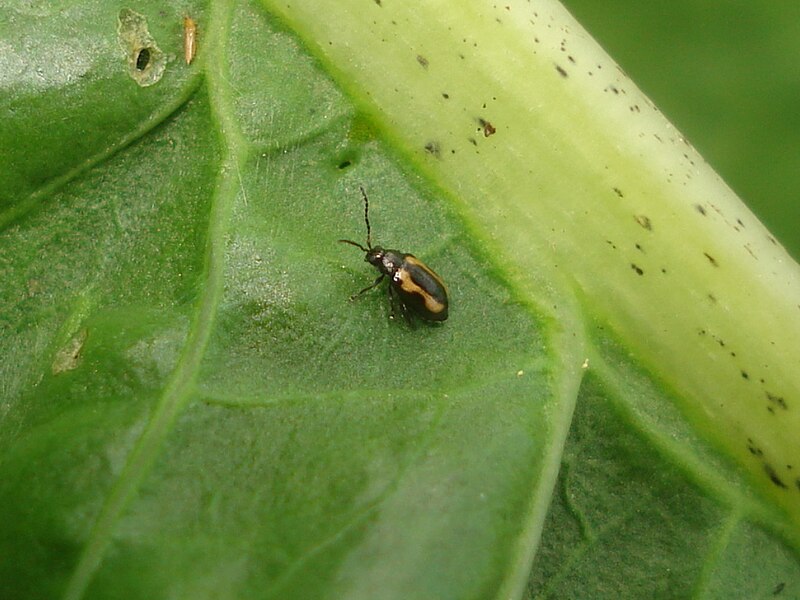
File:Phyllotreta striolata 01.JPGPlants belonging to the order Brassicales (aka cruciferin plants) produce compounds called glucosinolates (left), or mustard oils, which are responsible for the pungent flavour of mustard, cabbage, and horseradish.  These are secondary metabolites that cruciferins use as defense mechanisms against insects and herbivores.  When insects, like the striped flea beetle (Phyllotetra striolata), damage plant tissues, the released glucosinolates are brought into contact with an enzyme called myrosinase.  This enzyme forms isothiocyanates, which are toxic derivatives of glucosinolates, among other compounds.  This adaptation on the part of the plants against herbivory puts a selective pressure on its herbivore, in this case the striped flea beetle, to adapt to this defense.  Some insects are able to sequester plant defense compounds and use them for their own protection.

A group out of the Max Planck Institute in Germany recently reported that not only have flea beetles adapted to the glucosinolates-myrosinase system of cruciferin plants, but they have actually adapted their own system.  They are able to sequester intact glucosinolates from their host plant during feeding, and break it down by expressing their own myrosinase enzymes.  In fact, these beetles have become so efficient in this system, that they can sequester glucosinolates to levels making up 1.75% of their body weight!

This is the first reported case of a crucifer-feeding beetle with this adaptation to dietary exposure to glucosinolates - typically insects that are able to sequester glucosinolates don't chew on plants, they are sucking insects.  The sucking process does not damage the compartments that separate glucosinolates and myrosinase, and so these insects are able to sequester intact glucosinolates, without needing to express myrosinase enzymes to deal with them.  The mechanism in which the beetles handle the glucosinolates without autointoxication is not yet clear, but the authors suggest that there is likely some cellular compartmentalization at play that keeps the glucosinolate-myrosinase system separate.  It's also possible that these flea beetles use these as a defense mechanism; for example, the cabbage aphid stores and releases glycosinolates as a form of "mustard-oil bomb" when they are attacked.

This study leaves us with a whole host of new questions (as good science does), but it contributes significantly to our knowledge of plant-herbivore co-evolution.

Monday, May 5, 2014

Safety in numbers: bees use social cues to avoid predatory threats


There is safety in numbers.  Anyone who has ever had to walk home solo at night knows how vulnerable we can be when alone.  Animals find safety in numbers too: animals often associate into herds to reduce their probability of being attacked and to more easily spot predators.  But even though we know that this happens, very little is known about the behavioural experiences that contribute to the aggregation of individuals in response to predation.

Pollinators, like bees, also have predators, and have also evolved ways to avoid predation.  Bees are threatened by ambush predators, like the crab spider (Family Thomisidae), which does not build webs, but wait on flowers to, you guessed it, ambush their bee prey.  Some species of crab spiders are able to change their coloring, to camouflage themselves on flowers (below, left).  Others sit on leaves, but look like inconspicuous bird droppings, tricking their prey into a false sense of security (below, right).  But most crab spider ambushes are unsuccessful, and so bees are able to learn from their own experiences to avoid risky-looking flowers.  But avoiding sketchy flowers also has the potential to reduce foraging efficiency, so why would this be an adaptive trait?

File:Crab Spider Thomisus Female 5741.jpg   File:Phyrnarachne sp.jpg        

Well, a new study examined this phenomenon.  Bees use social cues to communicate between individuals in a colony.  For example, honeybees use a “waggle dance” to share information about the direction and distance to areas with lots of pollen and nectar, water sources, or new housing locations.  As it turns out, bumblebees also use social cues, like the “lessons learned” of their bee friends, to identify those flowers that are safe and those that are not.

Erika Dawson and Lars Chittka set up three bumblebee colonies in an artificial meadow where pollen sources were held in false flowers whose colors could be interchanged from white to yellow.  Bees were encouraged to forage freely in order to familiarize themselves with the area, prior to being trained to recognize flower color with either a reward or a predation risk.  One half of the bees were exposed to yellow flowers as the “safe” flowers, while the other half had white flowers as their “safe” flowers, to control for color preference.  The “dangerous” flowers were equipped with foam-coated pincers that could rapidly close to trap, but not harm, bees that landed there.  No other cues were provided other than flower color. 

Following training, the authors exposed the bees to only one flower color.  What they found was that the bees were far more likely to choose a “dangerous” flower to gather pollen if that flower was also occupied by other bees.  Those exposed to their identified “safe” flowers were equally likely to choose a free or occupied flower.  The authors conclude that because bees ignore the “safety in numbers” rule in the absence of a threat, and ignore their own personal experiences in the presence of a threat, that they are actively deciding when to use social information to avoid predation.  

I find this study really interesting, because I love to think about the complex lives of other organisms.  The only thing that stands out here, is that the researchers report really small sample sizes (n = 14 for each of the three treatment groups in the “buddy system” part of the experiment).  Now, I’m not a behavioral ecologist, so I’m not sure if this actually is an appropriate sample size or not, but I would be wary of generalizing these results.  But when taken in the context of learning and social interaction among bees, this study definitely strengthens the body of evidence available to us on the secret lives of bees.  It also shows that bee behavior is not a hard-wired set of rules, but can be adapted based on social cues and habitat conditions.

Sunday, May 4, 2014

Bias in genomics research: "charismatic" organisms prioritized in research

Last month, I wrote a post about cute animal conservation, and our aesthetic bias when it comes to which animals we care about and which we do not.  As it turns out, we have the same bias when it comes to the study of microorganisms!  A recent (open access!) opinion piece in Trends in Ecology & Evolution discusses this bias in our understanding of the genomics of microorganisms, with the majority of the information we have being based on the study of eukaryote genomes.

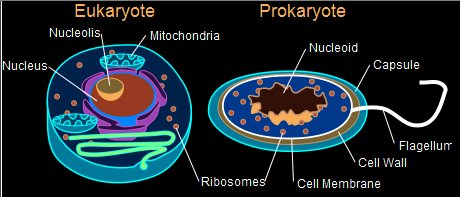
Organisms are divided into two groups based on their main cell type: prokaryotes and eukaryotes. Prokaryotes lack membrane-bound cellular compartments like mitochondria and nuclei:

Since mitochondria and chloroplasts contain DNA and the tools needed for protein synthesis, divide independently of the rest of the cell, and are able to carry out vital metabolic processes, it is believed (though not by all) that eukaryotic cells formed through a process called endosymbiosis, in which a cell engulfed another and retained its function.  

Endosymbiosis in a nutshellProkaryotes are single-celled organisms, and include two major classifications of life: Bacteria and Archaea.  Archaea are involved in the cycling of elements like carbon, nitrogen, and sulfur; they are not human pathogens.  Eukaryotes, on the other hand, can exist as single-celled or multi-celled organisms.  Members of Eukarya include plants, animals, fungi, protists, etc.  Eukaryotes are also the more complex of the three domains of life (Bacteria, Archaea, and Eukarya).  
The identification of eukaryotes in environmental biodiversity studies use 18S ribosomal DNA (rDNA) as a marker.  18S rDNA refers to the genes that encode the RNA of the small ribosomal subunit of eukaryotes.  For prokaryotic studies, 16S rDNA/rRNA is used.  

Genomic studies are key to explaining the evolution of eukaryotic cells, and yet, the authors argue, a significant amount of eukaryotic genomes are being largely ignored.  Research has been biased towards the study of mutli-cellular eukaryotes and their pathogens, ignoring the potentially genetically-rich single-celled eukaryotes.  This bias comes as a result of our very anthropocentric view of life, meaning we are interested in humans and how the natural work harms or benefits us.  The "big three" kingdoms of life (Metazoa, or animals, fungi, and embryophyta, or land plants) contain 96% of the described and studied eukaryotic species, and 85% of the sequenced genomes, to-date.  Yet they only represent 62% of the available 18S rDNA sequences.  The figure on the left describes this bias, as the majority of described species belong to Metazoa, yet significant portions of 18S rDNA belong to protists.

But the study of organisms belonging to the "big three" is also biased.  A lot of invertebrates are not as well-studied as bacteria, and species that are most useful for human survival, medicine, and agriculture are more frequently studied.  The authors note that this leaves gaps in our understanding of the eukaryotic tree of life, running the risk of neglecting the majority of eukaryotic diversity in future ecological and evolutionary studies.  They conclude their article with a call-to-action to the scientific community to fill in the missing parts of the eukaryote phylogenetic tree.

This week in biology/medicine (April 28-May 5, 2014)

 peacock-spider-courtship-display


Two new species of spiders have been identified this week: the cartwheeling spider and the peacock spider!  Sweet dreams.

Our garbage made it to the ocean floor before we did. (Open Access)

Pig heart transplants for humans could soon become a reality.

Turns out, you can smell sex and sexuality.

Scientists have developed sperm cells from the skin cells of infertile men.


Paper wasps can recognize each other's faces.

Coffee helps prevent eye damage.

Rising ocean acidity is having a drastic effect on shell formation in crustaceans.

Letting your child play with your iPhone may affect their development.

A non-invasive test for lung cancer is being developed that uses breath analysis.

Thursday, May 1, 2014

Improving genome editing specificity


File:Breeding transgenesis cisgenesis.svg
The main goal of biotechnology and genetic engineering is making changes to an organism's genome to make useful products.  Biotechnology is often used in agriculture, food production, and medicine.  Genetic engineering takes on many forms, including breeding to enhance selected traits and the insertion of genes from a related or unrelated organism.

An important tool in biotechnology is the process of genome editing, where a strand of DNA is inserted, replaced, or removed from a genome using specially designed nucleases, which break the phosphodiester bonds between the nucleotides of DNA.  These nucleases are designed to create double-stranded breaks at a desired location within the genome, triggering the cell's natural DNA repair mechanisms, known as homologous recombination (HR) and non-homologous end joining (NHEJ), which can be harnessed to make targeted gene insertions or deletions (indels).

There are specific families of nucleases that are artificially designed for targeted genome editing: zinc-finger nucleases (ZFN), transcription activator-like effector nucleases (TALEN), and clustered, regularly interspaced, short palindromic repeat (CRISPR)/CRISPR associated (Cas) nucleases.  One Cas nuclease from Streptococcus pyogenes, known as Cas9, is a popular tool in genome editing as an RNA-guided DNA endonuclease that cleaves complementary DNA strands.
(source)

CRISPRs provide a kind of record of immunity in bacterial genomes.  Infection with viruses caused the evolution of an adaptive method for silencing viral genes.  CRISPRs are short foreign DNA fragments that are incorporated into the host genome.  Processing of these fragments results in CRISPR-RNAs (crRNA) that form endonuclease-RNA complexes to cleave foreign DNA from invaders, acting like an early immune system.  Cas9 is one of these nucleases, creating double-stranded breaks in target DNA.  Recognizing a specific target DNA, called the protospacer adjacent motif (PAM), is the key to Cas9 activity.

The Cas9 nucleases are simple and monomeric, but have high frequencies of off-target indel mutations, making their use in human therapeutic applications suboptimal.  Enhancing their specificity is crucial to future applications of the CRISPR/Cas system.  There has been a significant amount of work done on dimerization of Cas nucleases to improve specificity.  One such study, published recently in Nature Biotechnology, describes RNA-guided FokI nucleases (RFN) for which dimerization is necessary for genome editing:

This dimerization enhances the specificity of nuclease activity because it depends on the binding of the two guide RNA (gRNA) strands to the DNA with a defined orientation and spacing.  This reduces the likelihood of non-specific cutting because it is unlikely that there are multiple regions within the genome that contain both complementary sequences.  

The improved specificity of the Cas9 nuclease was achieved by fusion of the dimerization-dependent FokI nuclease domain to the inactive Cas9 protein with a five amino acid linker, then co-expressing this system with plasmids containing pairs of gRNA.  This improved the RNA targeting range, and also provided the tools for expressing gRNA from RNA polymerase promoters, thus allowing the opportunity for cell-type specific and/or inducible control of genome editing.  The authors also found that non-specific indels coming from partial mismatches or off-site targeting of the gDNA is negligible when using this method.  The longer a gRNA molecule, the lower the probability of finding an identical sequence somewhere else in the genome.  For example, the authors suggest the use of a 45 base-pair long gRNA in human cells, targeting a specific site in the genome.  There is a low probability of having the same 45 base-pair combination somewhere else in the genome.  Using dimerization and two gRNAs decreases this likelihood even more.  Furthermore, the authors found that PAM-orientation was also key to specificity, with the PAM oriented outward.  This reduces the risk of having non-specific indels made in the genome and improves the use of Cas9 for genome editing in human cells.

Now why would we want to use genome editing in human cells?  Relax, it's not about creating superhumans (though that could be fun!).  Rather, genome editing is used in human cells to target HIV infection and for studying disease genotypes in stem cells, to name a few.

The authors also created a program for scanning the genome of interest to find appropriate RFN target sites.  They have made it freely available here.